



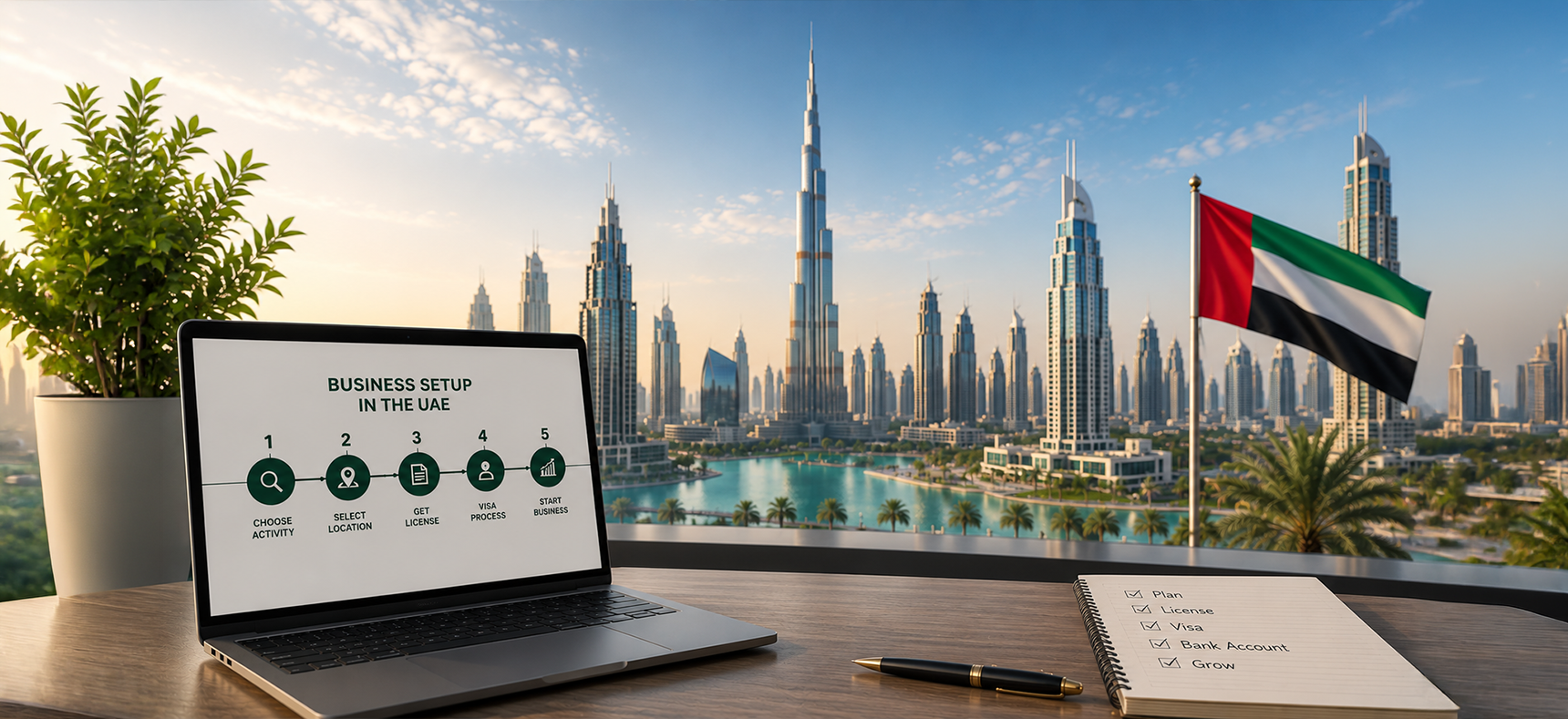
The United Arab Emirates continues to be one of the world's most attractive destinations for entrepreneurs, investors, and startups. With its strategic location, business-friendly policies, world-class infrastructure, and access to international markets, the UAE provides countless opportunities for businesses of all sizes.
Whether you're launching a technology startup, opening a retail business, establishing a consultancy, or expanding your existing company into the Middle East, understanding the business setup process is essential.
This guide walks you through every step of starting a business in the UAE in 2026.
Why Start a Business in the UAE?
The UAE has become a preferred destination for entrepreneurs because it offers a stable economy, modern infrastructure, and policies designed to encourage investment and innovation.
Some of the key advantages include:
- Strategic location connecting Asia, Europe, and Africa
- Modern banking and financial systems
- Business-friendly regulations
- Growing startup ecosystem
- Access to international markets
- Excellent logistics and transportation
- Skilled multicultural workforce
- Attractive tax environment for many businesses
These advantages make the UAE an ideal place for startups, SMEs, and international companies looking to expand globally.
Step 1: Define Your Business Activity
Every business starts with a clear idea.
Before applying for a business license, determine exactly what products or services you plan to offer. Your chosen activity determines the type of license you'll require and the approvals needed from relevant authorities.
Common business activities include:
- • Business Consultancy
- • Marketing Agency
- • Software Development
- • E-commerce
- • Trading
- • Manufacturing
- • Food & Beverage
- • Healthcare
- • Education
- • Real Estate
Choosing the correct activity from the beginning helps avoid delays, unnecessary costs, and future amendments to your business license.
Step 2: Choose Between Mainland and Free Zone
One of the biggest decisions entrepreneurs face is choosing where to establish their company.
Mainland Company
A mainland company allows businesses to operate throughout the UAE without geographical restrictions.
Ideal for businesses that:
- • Serve local UAE customers
- • Bid for government contracts
- • Open multiple branches
- • Require physical offices
Free Zone Company
Free Zones are designed to attract foreign investment and offer streamlined business setup processes.
Suitable for businesses that:
- • Operate internationally
- • Offer digital services
- • Run online businesses
- • Need simplified licensing procedures
- • Prefer flexible office solutions
Step 3: Select Your Legal Structure
The legal structure you choose determines how your business is owned, managed, and regulated in the UAE. It also affects liability, taxation, compliance requirements, and future expansion opportunities.
Common legal structures include:
Sole Establishment
Suitable for individual entrepreneurs who want full ownership and control of their business.
Limited Liability Company (LLC)
One of the most popular business structures, offering flexibility and limited liability protection.
Civil Company
Commonly used by professionals such as consultants, engineers, doctors, and lawyers.
Branch Office
Allows an existing local or foreign company to establish a presence in the UAE.
Representative Office
Designed for companies that want to promote their business without conducting commercial activities.
Free Zone Company
A popular option for startups and international businesses seeking simplified setup and operational flexibility.
Choosing the appropriate legal structure impacts ownership rights, liability, taxation, licensing requirements, and operational flexibility. Making the right decision from the outset helps your business remain compliant while supporting future growth.
Professional guidance at this stage can save significant time, reduce setup costs, and ensure your company is structured for long-term success.
The right choice depends on your business goals, target market, operational requirements, and long-term growth strategy. Taking the time to evaluate both options carefully can help you build a stronger foundation for future success.
Step 4: Reserve Your Trade Name
Your trade name is one of the first things customers and business partners will notice. It should be unique, professional, and compliant with UAE naming regulations while accurately representing your business.
When choosing a trade name, remember to:
Keep It Simple
Choose a name that is easy to remember, pronounce, and spell.
Reflect Your Business
Ensure your trade name aligns with your products, services, or industry.
Follow UAE Regulations
Avoid restricted, offensive, or misleading words that may violate naming guidelines.
Check Availability
Verify that your preferred trade name is available before submitting your registration.
A strong trade name not only helps you complete the registration process smoothly but also plays an important role in building your brand identity. Choosing the right name from the beginning creates a lasting impression and supports your long-term marketing and business growth.
Step 5: Apply for Your Business License
Once you've finalized your business activity, legal structure, and trade name, the next step is to apply for your business license. This license officially authorizes your company to operate legally in the UAE.
Depending on your business activity, you may require:
Commercial License
Suitable for businesses involved in trading, retail, import, export, and general commercial activities.
Professional License
Designed for service-based businesses, consultants, freelancers, and professionals offering specialized expertise.
Industrial License
Required for businesses involved in manufacturing, production, assembly, or industrial processing activities.
Tourism License
Issued to businesses operating in the travel, hospitality, tourism, and related service sectors.
After submitting your application, the relevant licensing authority reviews your business documents, verifies compliance with regulatory requirements, and processes the necessary approvals before issuing your business license.
Ensuring that all documentation is accurate and complete can help speed up the approval process and avoid unnecessary delays.
Step 6: Complete Visa and Immigration Procedures
After your business license is issued, you can begin the visa and immigration process for yourself, your business partners, employees, and eligible family members. This step allows you to legally live and work in the UAE while operating your business.
Depending on your business structure, you may apply for:
Investor Visa
Issued to business owners and investors who establish or invest in a UAE company.
Partner Visa
Available for shareholders and partners who hold ownership in the company.
Employment Visa
Required for employees hired to work legally within your UAE business.
Family Sponsorship
Eligible business owners and employees may sponsor their spouse, children, and other qualifying family members.
As part of the visa process, applicants are typically required to complete medical fitness examinations, register for an Emirates ID, and fulfill immigration formalities before receiving their residence visa.
Completing these procedures accurately and on time helps ensure a smooth transition, allowing you to focus on launching and growing your business in the UAE.
Step 7: Open a Corporate Bank Account
A corporate bank account is essential for managing your company's finances professionally. It enables you to receive payments, pay suppliers, manage payroll, and build financial credibility with customers and business partners.
Banks typically require the following documents:
Trade License
A valid business license issued by the relevant UAE authority.
Company Documents
Incorporation documents, Memorandum of Association, and other company registration records.
Passport Copies
Passport copies of shareholders, directors, and authorized signatories.
Shareholder Information
Details about company ownership and shareholder structure.
Business Plan (If Required)
Some banks may request a business plan outlining your operations, expected revenue, and transaction activity.
Selecting the right banking partner depends on your business model, expected transaction volume, international banking needs, and future expansion plans. Choosing the right bank early can simplify your day-to-day financial operations.
Step 8: Set Up Accounting and Tax Compliance
Many startups focus heavily on launching their business but overlook financial management. Establishing proper accounting processes from day one helps maintain compliance, improve decision-making, and support long-term business growth.
Proper bookkeeping helps businesses:
Monitor Cash Flow
Keep track of income, expenses, and available funds.
Track Profitability
Measure financial performance and business growth.
Meet Regulations
Stay compliant with UAE financial reporting requirements.
Prepare Financial Reports
Generate accurate reports for banks, investors, and stakeholders.
Build Investor Confidence
Well-maintained financial records increase business credibility.
Businesses should also understand their obligations regarding VAT and Corporate Tax where applicable. Maintaining accurate financial records helps avoid penalties while ensuring smooth business operations.
Working with experienced accounting professionals allows business owners to stay compliant, make informed financial decisions, and focus on growing their business with confidence.
Step 9: Build Your Brand Presence
Obtaining a business license is only the beginning. To attract customers and compete effectively, your business needs a strong and professional brand presence both online and offline.
Essential investments for building your brand include:
Logo & Branding
Create a memorable brand identity that reflects your business values.
Business Website
Establish credibility with a professional and responsive website.
Search Engine Optimization
Improve your visibility on search engines and attract organic traffic.
Google Business Profile
Increase local visibility and help customers find your business.
Social Media Marketing
Build customer engagement and strengthen your online community.
Content & Paid Marketing
Reach your target audience through valuable content and strategic advertising campaigns.
A strong digital presence builds trust, increases brand awareness, and helps potential customers discover your business. Consistent branding and effective marketing play a crucial role in turning new businesses into successful, long-term brands.
Step 10: Focus on Sustainable Growth
Launching your business is a major milestone, but long-term success depends on your ability to grow, adapt, and continuously improve. Businesses that thrive in the UAE focus on innovation, operational efficiency, and delivering exceptional customer experiences.
Areas to prioritize for sustainable growth:
Customer Experience
Deliver outstanding service to build loyalty and encourage repeat business.
Process Automation
Improve efficiency by automating repetitive business tasks and workflows.
Marketing Performance
Track campaign results and optimize your marketing strategy for better ROI.
Financial Planning
Maintain healthy cash flow and make informed financial decisions for future growth.
Team Development
Invest in your people through training, leadership, and continuous learning.
Business Strategy
Review market trends regularly and refine your strategy to stay competitive.
Sustainable growth comes from making informed decisions, embracing innovation, and continuously adapting to changing market conditions instead of simply reacting to challenges.
Common Mistakes to Avoid
Many first-time entrepreneurs make avoidable mistakes during the company formation process. Being aware of these common pitfalls can save time, reduce costs, and prevent unnecessary setbacks.
- ✓ Choosing the wrong business activity
- ✓ Selecting an unsuitable license
- ✓ Ignoring bookkeeping and financial planning
- ✓ Delaying branding and marketing efforts
- ✓ Underestimating compliance requirements
- ✓ Choosing the wrong legal structure
- ✓ Operating without a long-term business strategy
- ✓ Not seeking professional guidance when needed
Pro Tip
Planning ahead and working with experienced business consultants can significantly reduce delays, improve compliance, and help your business launch smoothly.
Final Thoughts
Starting a business in the UAE has never been more accessible, but building a successful company requires far more than obtaining a trade license. Every stage, from choosing the right business structure and completing legal requirements to establishing your brand and maintaining financial compliance, contributes to long-term success.
Entrepreneurs who invest in careful planning, professional guidance, and sustainable business practices are better positioned to seize opportunities in one of the world's most dynamic economies.
Whether you're launching your first startup or expanding an existing business into the UAE, partnering with experienced business advisors can simplify the entire process, minimize risk, and allow you to focus on what truly matters: building a successful and future-ready business.
Ready to Start Your UAE Business Journey?
From company formation and licensing to bookkeeping, marketing, and business consultancy, Rootiva provides end-to-end business solutions to help entrepreneurs establish and grow their businesses with confidence.